
Why Hinoki Manaita is One of the Best Cutting Boards for Japanese Knives
A hinoki manaita is one of the best cutting boards for Japanese knives because it is gentle on fine edges, offers a clean and balanced cutting feel, and suits daily kitchen use better than harder board materials.
In Japanese cooking, a manaita is not just a prep surface, but a tool chosen to support precision, control, and long-term knife performance.
What Is a Manaita, and Why Is It So Good for Japanese Knives?
A manaita (俎板) is a Japanese cutting board, but the idea goes beyond a simple kitchen surface.
In Japanese food culture, the board is closely tied to precision, rhythm, and blade control. It is the place where the knife meets the ingredient, so the quality of that surface directly affects how the knife performs over time.
This matters even more with Japanese knives and other high-grade kitchen knives.
Many Japanese blades are made thinner and harder than typical Western kitchen knives. That gives them excellent sharpness and cleaner cuts, but it also means the edge benefits from a surface that is supportive rather than harsh.
If the board is too hard, the knife edge takes more impact every time it lands. Over time, that can shorten edge life and make the knife feel less refined in use.
That is why Japanese cutting boards made from softer woods are so highly valued.
A good wooden board gives just enough under the blade to reduce stress while still feeling stable and controlled.

Japanese manaita crafted from sustainably sourced hinoki wood
The Cultural Importance of the Manaita in Japanese Cooking
The importance of the manaita is reflected even in language.
The Japanese word itamae (板前), often translated as chef, literally evokes the person standing in front of the board.
That detail says a great deal about Japanese cooking culture. The board is not treated as a secondary tool, but as part of the chef’s craft itself.
What Makes Hinoki One of the Best Woods for Cutting Boards
Among the woods used for Japanese cutting boards, hinoki (檜, Chamaecyparis obtusa, Japanese cypress) stands out for its balance of lightness, fine grain, and knife-friendly feel.
It has long been valued as a practical material for a manaita, especially when the goal is to pair the board with sharp, refined kitchen knives.
The appeal of hinoki is not only cultural. It is also practical.
One of its most important strengths is how gently it supports sharp edges.
A cutting board should not be so soft that it feels unstable, but it should not be so hard that it works against the knife.

Hinoki sits in a very useful middle ground. With a Janka hardness often cited around 510 to 800 lbf, it is relatively soft by cutting-board standards, which helps explain why it feels gentler on fine knife edges than much harder materials. It has enough resilience to soften the impact of repeated cuts, which is especially important for fine Japanese blades designed for precision rather than brute force.
Hinoki also offers a clean and balanced cutting feel. Good knife work is not only about sharpness. It is also about feedback. A board that feels too rigid can make prep noisy and tiring, while one that feels too soft can make cutting feel vague.
Hinoki offers a more natural response under the blade, which is one reason it is often preferred for careful slicing and repetitive prep work.
Hinoki’s Natural Hygiene Benefits and Material Appeal
Hinoki is also valued for the qualities that make it feel especially at home in the kitchen. It is often appreciated for its natural antibacterial properties, its fresh clean aroma, and the way it fits a more thoughtful approach to food preparation.
For readers trying to move away from heavily synthetic surfaces, it can also feel like a more reassuring choice than boards associated with plastic wear over time.
This part of the hinoki choice is worth understanding more deeply, especially if you are comparing natural wood and synthetic materials.

Anatomy of a manaita crafted from solid Hinoki wood.
In short, hinoki stands out because it combines edge-friendly performance, a balanced cutting feel, and natural kitchen appeal in one material.
Note: For a closer look at hygiene, care, and long-term use, explore our dedicated articles on manaita care and microplastics in cutting boards.
Practical Use of a Hinoki Manaita: Vegetables, Sushi, and Meat
Now let’s move from theory to the kitchen and see how a manaita performs in everyday use.
For Vegetables and Everyday Prep
A hinoki board is an excellent match for vegetables.
It supports clean cuts on ingredients such as scallions, daikon, cucumbers, herbs, mushrooms, and leafy greens.
When using a santoku, gyuto, or nakiri, the board helps the knife move in a more controlled way, without the sharp rebound that harder surfaces can create.
For Sushi and Sashimi Preparation
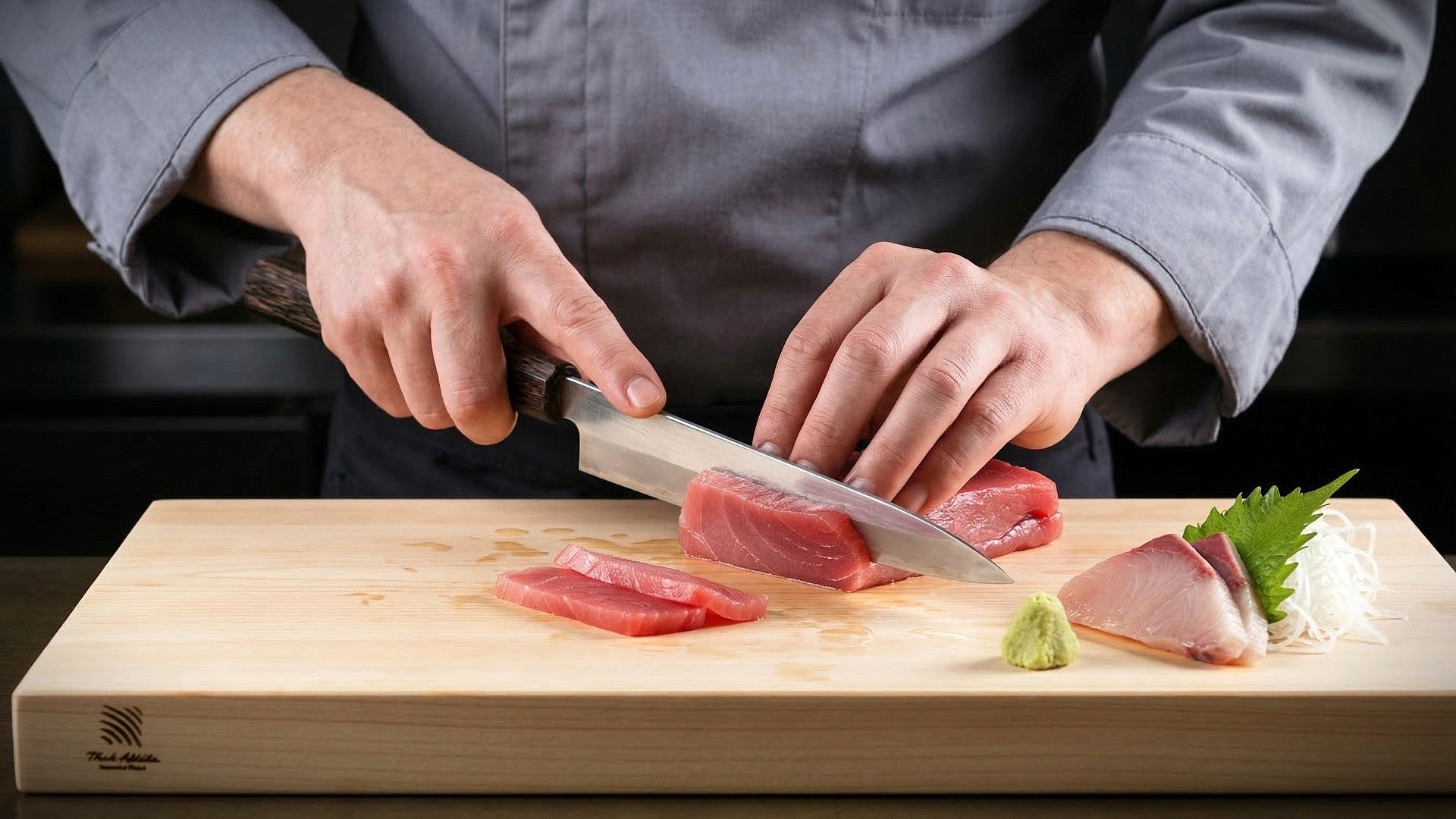
For sushi and sashimi preparation, the value of a manaita hinoki board becomes even clearer.
Japanese cuisine places great importance on clean surfaces, precise cuts, and visual presentation.
A board that supports delicate slicing helps the knife move smoothly through fish and other soft ingredients.
This is one reason hinoki is often associated with more refined prep work.
For Meat and Separate Prep Use
A manaita cutting board can also work very well for meat, especially for trimming and slicing boneless cuts.
That said, good kitchen practice still matters. If you regularly prepare raw meat, poultry, or seafood, it is wise to keep separate prep areas or separate boards for hygiene.
Hinoki is a strong everyday choice, but thoughtful use is still part of long-term care and safe food preparation.
In other words, Japanese cutting boards made from hinoki are not limited to one niche use. They are versatile enough for daily cooking, while still offering the refined cutting feel that makes them stand out.
Why a Hinoki Manaita Makes Sense for Serious Home Cooks
For many buyers, the real question is not simply whether a hinoki board looks beautiful. It is whether it makes sense as part of a complete kitchen setup.
As a curator of high-quality Japanese kitchenware, Tsukushi sees this choice not as a minor accessory decision, but as part of building a kitchen setup where knife, board, and daily use work in harmony.
If you already use Japanese knives or other high-grade kitchen knives, pairing them with the right board is a practical decision. A hinoki Japanese manaita helps align the quality of the cutting surface with the quality of the blade.
That makes the purchase easier to justify, especially for cooks who care about long-term use rather than replacing tools casually.
This is also where a true manaita stands apart from a generic wooden board. The difference is not only material, but purpose.
A well-made hinoki board is chosen for knife compatibility, daily usability, and the kind of cooking experience it supports over time.
FAQ About Manaita and Japanese Cutting Boards
If you are exploring Japanese cutting boards for the first time, these are the most useful questions to answer before buying.
What is a traditional Japanese cutting board?
A traditional Japanese cutting board is a wooden cutting board called manaita (俎板), often made from hinoki or other softer woods chosen to work well with sharp kitchen knives.
It is valued for its balance, cutting feel, and long-standing role in Japanese food preparation.
What is the best wood for a high-quality manaita
For many cooks, hinoki is one of the best woods for a high-quality manaita because it balances edge protection, clean cutting feel, lightness, and everyday usability.
Other woods do exist, but hinoki is often the most natural choice when the goal is to pair the board with fine kitchen knives.
How to choose the right manaita for sushi preparation
Choose a manaita hinoki board with enough length for smooth slicing, a stable thickness, and a surface that feels gentle under the blade.
For sushi and sashimi work, the goal is clean movement, precise cuts, and a board that supports delicate ingredients without harsh feedback.
How to care for a Hinoki wood Cutting board
Start with simple habits: lightly wet the board before use, wash it soon after prep, dry it upright, and avoid soaking or dishwashers. These small steps help a hinoki board stay cleaner, more stable, and better suited to daily knife work.
Where to buy a durable manaita online with fast shipping
Look for a specialist store that clearly explains the wood, craftsmanship, size, and intended use of the board.
If you want a durable manaita paired with clear product information and worldwide tracked shipping, Tsukushi offers a focused selection designed for customers looking for authentic Japanese kitchen tools.
Where to find eco-friendly manaita made from sustainable wood
The best option is a store that shares clear information about wood origin, responsible sourcing, and long-term usability.
At Tsukushi, our approach focuses on thoughtfully selected Japanese-made pieces that emphasize natural materials, lasting use, and a more considered alternative to disposable kitchenware.