
Haptic Wellness: The Power of Matte and Tactile Japanese Ceramics
In a world built on frictionless glass, a quiet counter-movement is taking shape.
Haptic Wellness is the defining design shift of 2026, and its most eloquent expression lives in the rough, honest surface of handcrafted Japanese ceramics.
This movement is finding significant resonance in Australia, where the intersection of a high-paced digital lifestyle and intense natural light creates a unique demand for Haptic Wellness.
From tactile ceramics to haptic homeware, the shift is already underway.
The Antidote to Digital Fatigue: Why We Need Sensory Grounding
There is a particular kind of exhaustion that no amount of sleep fully resolves. It accumulates quietly, over months and years of reaching for a phone before your eyes have properly opened, of eating meals in front of lit rectangles, of spending entire days without ever touching anything that wasn't manufactured to feel like nothing at all.
Call it what it is: a tactile drought.

Close-up detail of a yakishime mug, emphasizing its rough, tactile surface.
What Our Hands Were Built For
Our fingertips carry an evolutionary intelligence that long predates language.
For millennia, they were the primary instruments through which we understood the world, reading the grain of wood, the grit of stone, the yielding give of earth after rain.
This instinct to seek out natural textures and living materials is also at the heart of biophilic design, the practice of bringing nature's sensory richness into the spaces we inhabit daily.
That sensitivity hasn't gone anywhere. What has changed is what we ask it to do.
Those same fingertips now spend the majority of their waking hours skating across screens engineered to eliminate all friction, all texture, all physical information whatsoever.
The gap between what our hands were built for and what they're actually doing has never been wider.
Australia as a Case Study in Digital Overstimulation
Australia offers a particularly sharp lens on this problem. As of early 2025, internet penetration sits at 97.1%, with mobile connections exceeding the total population at 128%.
The sheer volume of daily digital touchpoints (flat glass surfaces, scrolling feeds, notification cycles) creates an environment of near-constant visual and cognitive stimulation with almost no tactile variation. (DataReportal, Digital 2025).
The physiological cost is measurable. A 2022 study published in Nature’s npj Mental Health Research found that adults who significantly reduced recreational screen time showed improved well-being, lower tension scores, and reduced fatigue within just two weeks, pointing to a direct link between flat-surface digital exposure and chronic low-grade stress.
Light, Glare, and The Compounding Effect
In cities like Sydney or Perth, the problem compounds. Intense natural sunlight bouncing off glossy mass-produced interiors creates a persistent visual noise: glossy screens, glossy tableware, glossy benchtops, each multiplying the last. The eyes never fully rest.
This is where matte pottery enters the conversation, not as decoration, but as genuine intervention.
A handcrafted piece on a kitchen bench asks nothing of you digitally. It offers instead a quiet physical fact: something real, made by hand, something that pushes back.
That subtle resistance is, in the most literal sense, grounding.
The Science of Touch: How Tactile Ceramics Support Stress Regulation
The fingertips are among the most neurologically active parts of the body. They are densely packed with Meissner's corpuscles , sensory receptors specifically tuned to texture, pressure and surface variation.
When these receptors encounter something genuinely irregular and tactile, the brain responds in ways that a smooth glass screen simply cannot trigger.
While no study has measured cortisol in response to ceramics specifically, evidence from tactile neuroscience and material studies suggests that rich, grounding textures can support the body’s natural stress‑regulation systems.
What a Handcrafted Piece Does Differently
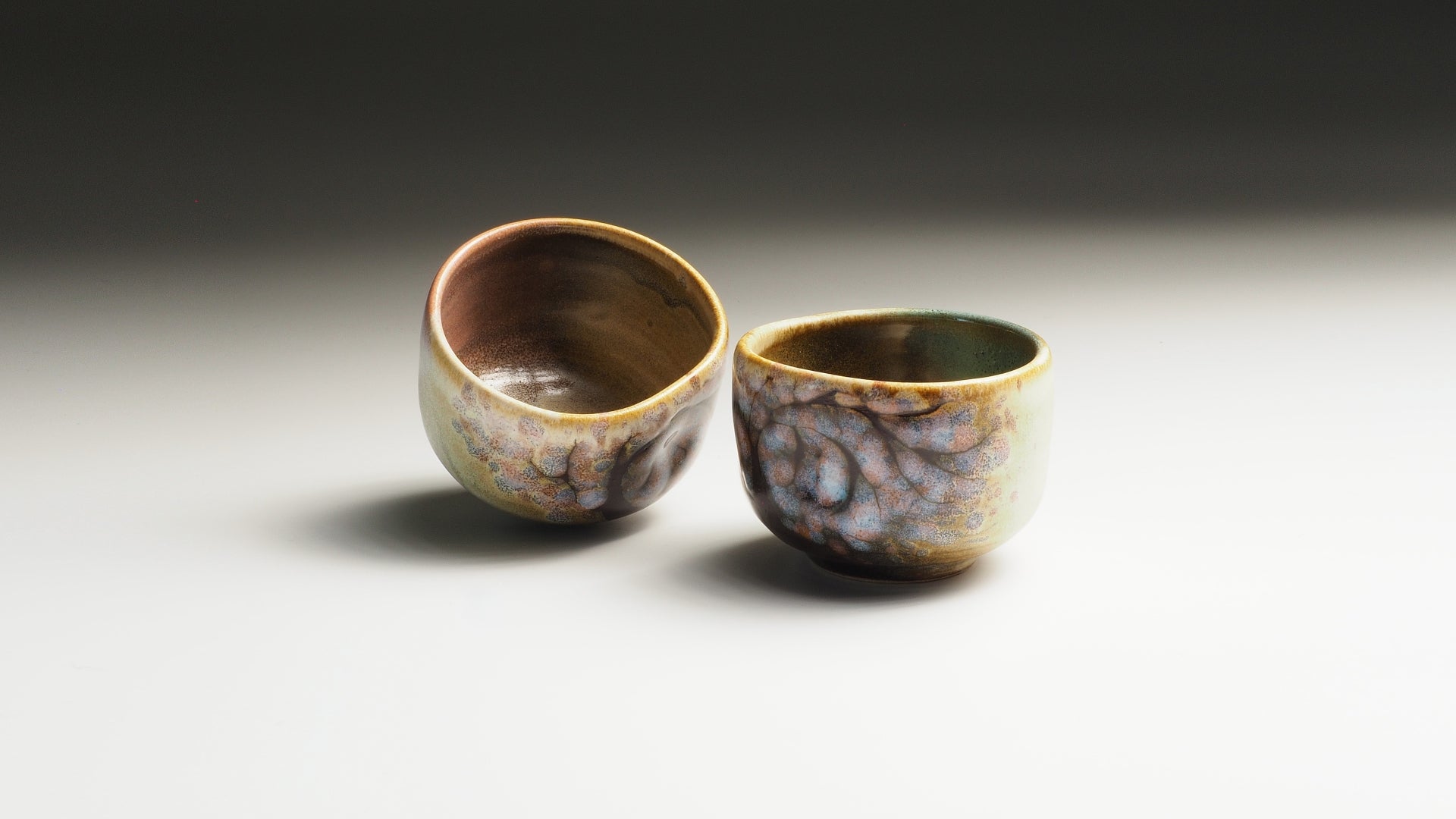
Pick up a piece of genuine Japanese pottery; a cup, a small plate, an incense holder, a sake vessel. The surface has memory: of the clay's mineral composition, of the potter's hands, of the kiln's heat. None of that is uniform, and that is precisely the point.
Each variation registers in your fingertips as a small, distinct event. The brain, receiving that stream of physical information, shifts its attention outward, away from the internal noise of worry and distraction, and toward the simple, grounding fact of the object in your hands.
Imperfection as Intention
The weight of a well-thrown cup, the grip of a rough-finished mug, the slight irregularity of a hand-pressed plate: these are not accidents.
They are features, refined over centuries of practice, that place the user firmly in their body and in the present moment. Japanese craft culture understood the calming power of touch long before it had a name for it.
Wabi-sabi (詫び寂び), the Japanese philosophy of finding beauty in imperfection, takes this further still.
A cracked glaze, an asymmetric rim, a surface that dips where a thumb once rested, each of these is an additional point of tactile interest, a detail the fingers notice and the mind quietly settles around.
In wabi-sabi pottery, imperfection is not something to look past. It is something to hold.

Interior view of a yakishime bowl by Ohmi Ceramics, highlighting its pronounced texture and the thumb indentation designed for a more secure, comfortable grip.
Matte Pottery and Yakishime: The Rest Your Senses Need
The surfaces around you are either adding to your sensory load or relieving it. Matte Japanese ceramics, and Yakishime in particular, are built to do the latter.
When Less Reflection Means More Rest
There is a reason certain rooms immediately lower your shoulders. It has little to do with furniture and everything to do with how light behaves.
Polished, glossy surfaces (lacquered tabletops, mass-produced glazed ceramics, chrome fixtures) multiply ambient light, scattering it in every direction.
The eyes never fully settle.
Matte and unglazed ceramics works the opposite way. It absorbs light rather than deflecting it, occupying space without demanding attention.
This quality (what makers sometimes call the presence of good earthy tableware) is felt before it is noticed.
Placing a single handcrafted matte piece on a shelf, a wide cup, a small lidded jar, a textured mug, is a small act of visual mercy.
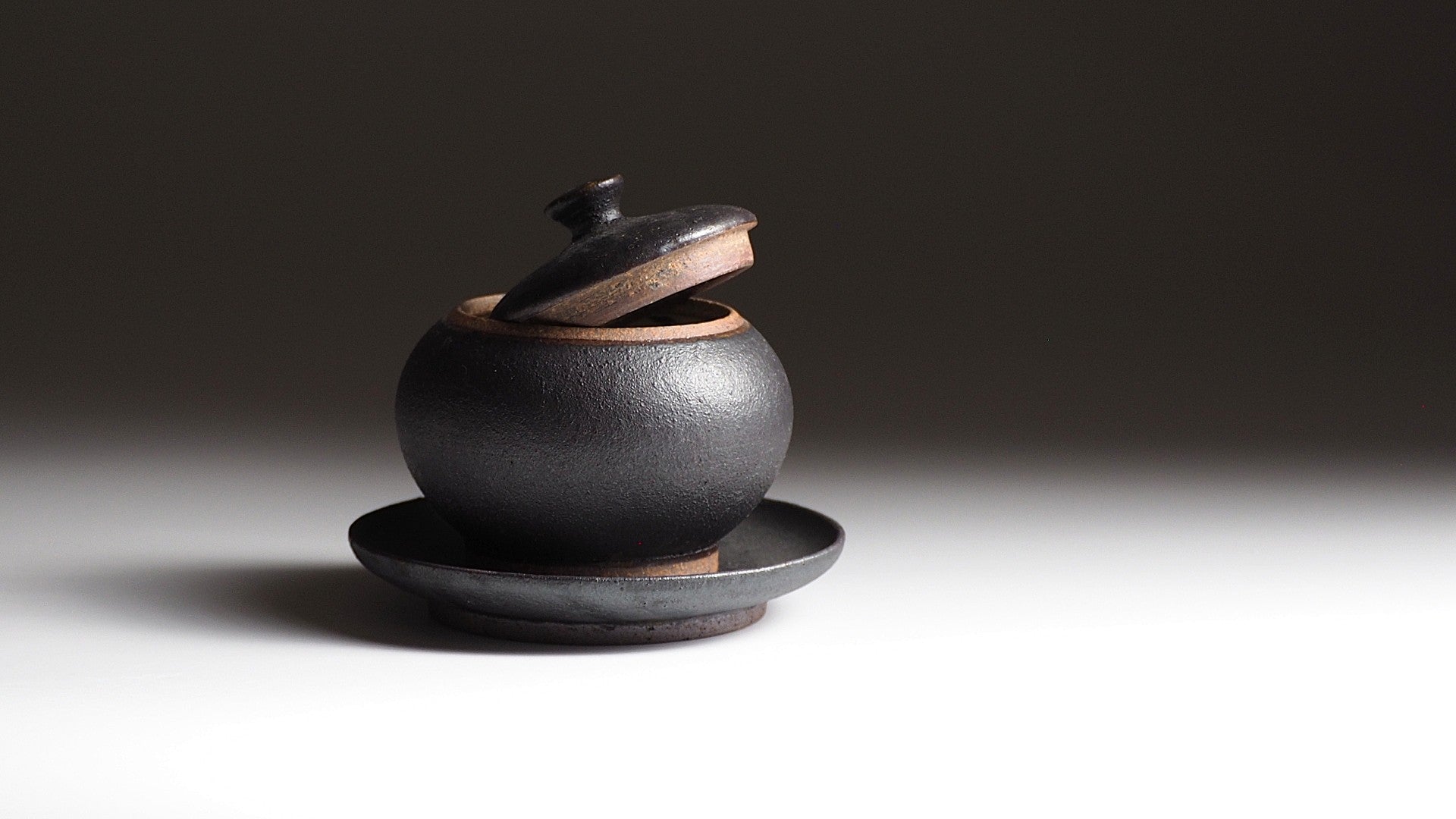
Matte black Japanese pottery in a modern interior is particularly effective: its depth absorbs rather than amplifies whatever light the room holds.
A room full of them becomes something else entirely: quieter, slower, easier to be in.
Yakishime: Fired Without a Mask
No tradition takes this further than Yakishime (焼き締め), the ancient Japanese practice of firing clay at high temperature without any glaze.
The surface is left entirely bare, exposing its mineralogy, its grain, and the direct marks of the kiln's heat. What comes out is not just an object but a record — of the clay, the fire, the hands that shaped it. No two pieces are alike.
Holding a Yakishime piece feels different from anything mass-produced. It is warm, slightly rough, quietly alive in the hand.
A cup, an ornament, a small vessel on a windowsill, each one offers the kind of sensory contact that accumulates into something meaningful over time.
Choosing these objects for the home is not simply a design decision.
At its best, it becomes calming minimalist Japanese home decor in the truest sense, not a look, but a practice.
To begin your own practice of tactile grounding, explore our curated selection of Yakishime and Matte Japanese Ceramics.
FAQ: Understanding Haptic Wellness and Tactile Design
Explore the intersection of ancient craft and modern sensory science with these practical insights into integrating haptic wellness into your daily life.
What is Haptic Wellness in home design?
It is the practice of choosing materials that engage your sense of touch to reduce stress.
Handcrafted ceramics, rough linen, unglazed stoneware, objects that push back a little. In a world of flat screens, that physical feedback is genuinely grounding.
Sensory ceramics are among the most effective tools for this: durable, beautiful, and present in the moments that matter most.
Why is matte dinnerware better for sensory overload?
Glossy surfaces scatter light and create visual noise your brain has to constantly process. Matte ceramics absorb light instead, giving both your eyes and your hands a quieter, more restful experience.
Textured dinnerware and sensory tableware go further still, adding haptic variety to every meal
How do textured ceramics promote mindfulness?
When your hands are engaged with something texturally interesting, your attention naturally follows.
Textured ceramic mugs for sensory overload are a practical starting point, the grip alone is enough to interrupt a spiral of digital distraction.
Mindful eating with haptic ceramic bowls follows the same logic; when the object in your hands is interesting, the meal becomes an experience.
What is Yakishime?
Yakishime (焼き締め) is an ancient Japanese firing technique where clay is fired at high temperature without any glaze. The result is a raw, porous, deeply tactile surface.
No two pieces look or feel alike, which makes them particularly effective for haptic grounding.
Unglazed Japanese clay cups for tactile grounding are among the most accessible entry points into the tradition.
How do I start integrating Japanese ceramics at home?
Start with one object you will touch every day: a Yunomi teacup, a small plate, a mug. Replace one mass-produced piece with something handcrafted.
The difference in how it feels over time is where the benefit lives. Small changes, repeated daily, add up.
That is how the therapeutic benefits of handcrafted pottery become part of daily life — not through intention, but through repetition.
Is there a real difference between mass-produced and handcrafted matte ceramics?
Yes.
Industrial matte glazes look similar but feel smooth and uniform.
Handcrafted pieces have micro-variations (slight ridges, pressure marks, natural irregularities ) that genuinely engage the fingertips.
That surface complexity is what makes authentic tactile tableware for anxiety relief work, and what no industrial process can replicate.