

Japanese Pottery Care Guide: What Is Medome and Why Your Ceramics Might Need It
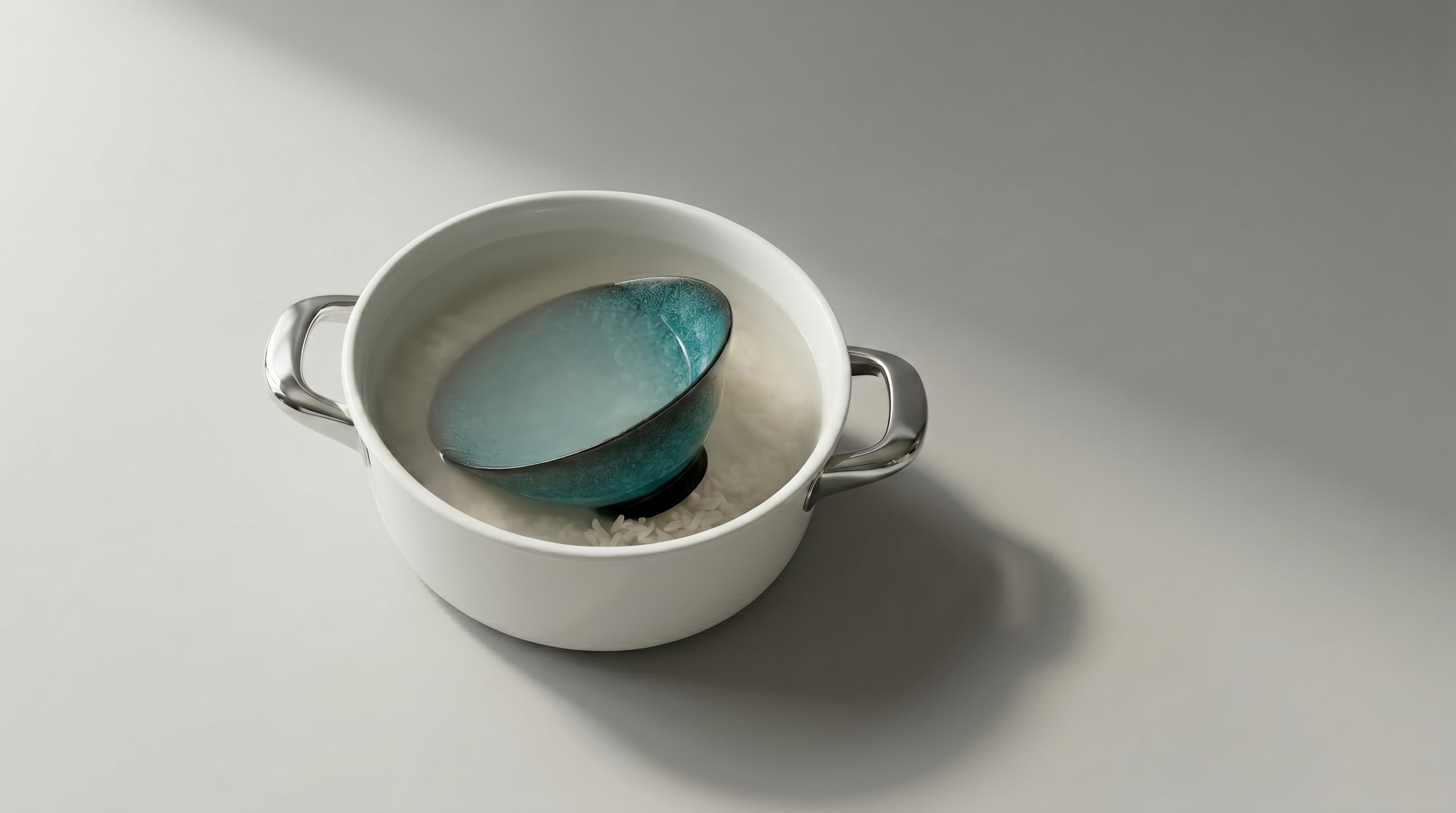
Medome (目止め) is the traditional Japanese process of sealing the microscopic pores of unglazed or highly porous pottery using the starch from rice-washing water.
It is an essential first step for earthenware and certain stonewares before their first use to prevent deep stains, food odors, and moisture damage.
Not every ceramic piece needs it. Whether medome is recommended depends on the clay body, firing temperature, glaze, and the maker's own instructions.
To put this guide together, we spoke directly with several of the Japanese artisans we work with at Tsukushi, potters whose pieces we handle, ship, and recommend every day.
What follows is their knowledge, combined with our own experience curating handmade ceramics for customers around the world.
What Is Medome?
Medome (目止め) literally means "pore-stop." It is the traditional Japanese method of sealing the microscopic pores of a new pottery piece before its first use.
The process works through starch. When a porous piece is simmered in rice-washing water, starch molecules migrate into the open channels of the clay body. As the water cools, the starch sets inside those channels, reducing the piece's capacity to absorb liquids and contaminants from everyday use.
What Medome Does, and What It Does Not
Medome does not make pottery waterproof. It creates a protective layer that helps the piece age gradually, developing a natural patina without the risk of irreversible staining on first use.
What medome helps protect against:
- Deep staining from soy sauce, wine, tea, coffee, and food oils
- Odor retention inside the clay body
- Moisture absorption that, combined with poor drying habits, can contribute to mold and persistent odor
Which Pieces Need It?
As a general rule, medome is relevant for pottery that is porous, meaning the clay body can absorb liquids through its surface. This applies to most unglazed or partially glazed earthenware and stoneware, and to pieces with kan-nyu (貫入), the fine hairline crackle pattern found in certain glazes.
Porcelain, and most fully glazed ceramics fired at high temperatures, do not require medome.
For instance, high-fired, unglazed stoneware like our Ohmi ceramics Yakishime pieces undergoes extreme kiln temperatures. This intense heat causes the clay particles to partially fuse, significantly tightening the material's micro-porosity right from the firing stage.
The detailed breakdown of which ceramic types are porous and why, is covered in the next section. But if you are unsure whether your specific piece needs medome, the most reliable answer is always the maker's own care instructions.
When Not to Do Medome
Do not perform medome if:
- The maker's instructions say it is unnecessary
- The piece is porcelain or fully vitrified stoneware
- The piece has metallic decoration: gold, silver, or platinum overglaze can be damaged by prolonged heat exposure
- The piece shows existing damage or has been repaired
- The piece includes non-ceramic components such as wood, lacquer, or metal fittings
- The piece is decorative and not intended for food use
A piece that does not need medome will not benefit from it. The process also carries a small risk of thermal stress for unsuitable pieces.

An authentic unglazed Yakishime coffee mug set from our Ohmi Ceramics collection. Due to the high-temperature firing process, a prescriptive medome treatment is not required before first use.
Understanding Pottery Porosity
Before performing medome, it is important to understand how porosity works in Japanese creamics.
The need for medome does indeed depend on how porous a piece is.
Porosity is determined by a combination of factors: clay composition, firing temperature, degree of vitrification, glaze coverage, and whether any part of the clay body is left exposed.
Higher firing temperatures cause the clay to vitrify: particles fuse into a denser, less porous structure. Lower temperatures leave the clay body partially open, with microscopic channels that absorb water, oils, and food pigments.
This porosity is not a defect. It is what gives Japanese pottery its characteristic warmth, texture, and capacity to develop character with use.
Ceramic Types and Medome: A Practical Reference
The table below covers the main categories you will encounter in Japanese ceramics, and whether medome applies to each.
| Type | Japanese term | Firing temp. | Porosity | Water absorption | Medome needed? |
|---|---|---|---|---|---|
| Earthenware | 土器 doki | 600–900°C | Very high | Very high | Yes |
| Traditional pottery | 陶器 tōki | 1,000–1,250°C | Medium–high | Moderate to high | Often yes |
| Stoneware / yakishime | 炻器 sekki | 1,200–1,300°C | Low–medium | Low | Check with maker |
| Porcelain | 磁器 jiki | 1,250–1,400°C | Very low | Negligible | No |
These are practical guidelines, not fixed rules. Japanese kilns and makers vary widely. The most reliable advice is always the maker's own instruction for your specific piece.
An example of traditional pottery that does not require medome is, for instance, the fully glazed Nanasai Tenmoku pottery of the Nunobiki Kiln. Because this unique glaze forms a naturally impermeable and fully sealed barrier across the entire surface of the piece, a seasoning treatment is unnecessary before its first use.
The Grey Area: Glazed Pottery
Not all glazed pottery is fully sealed. A glossy glaze may close the visible surface while the clay body beneath remains porous. This is particularly common around the foot ring, rim, or areas where the glaze is naturally thin.
If you are unsure about a piece you already own, contact the studio or shop where it was made.

The fully glazed Haruhana guinomi sake set from the Nunobiki Kiln. Due to the impermeable nature of the Nanasai Tenmoku glaze, a medome seasoning treatment is unnecessary before its first use.
How to Perform Medome Safely at Home
The following steps are based on guidance shared directly with us by Taichi Kawai of Usurai Pottery, a Kyoto-based potter whose pieces we carry at Tsukushi. The process is simple, but a few details (particularly around heat and cooling) make a real difference to the outcome.
What You Need
- The pottery piece
- A pot large enough to fully submerge the piece without it touching the sides
- Rice-washing water (kome no togijiiru, 米の研ぎ汁): the cloudy water produced when rinsing uncooked rice. If unavailable, use plain water with a small pinch of raw rice, or a teaspoon of rice flour dissolved in water
- A stovetop on low heat
- A soft sponge
The Process
Step 1. Prepare.
Place the piece in the pot. Add rice-washing water until fully submerged.
If rice-washing water is not available, water with a handful of rice may also be used.
Step 2. Heat slowly.
Bring the water to just below boiling over medium-low heat. Small bubbles will rise from the bottom. Do not allow a rolling boil: thermal shock can stress the glaze.
Step 3. Simmer.
Reduce to the lowest heat setting so that the water does not boil, and simmer gently for approximately 10 minutes.
Step 4. Cool completely.
Turn off the heat. Leave the piece undisturbed in the water until it reaches room temperature. The starch sets as the temperature drops, removing the piece while still hot interrupts the process.
Step 5. Rinse and dry.
Remove the piece. Rinse lightly with clean water and a soft sponge.
Allow to dry completely, preferably overnight, in a well-ventilated area before first use.

When to Repeat Medome
- If the piece absorbs liquids noticeably faster than before
- If hairline cracks appear in the glaze surface
- If the piece has been stored unused for an extended period
- As a general rule: once a year for pieces in frequent daily use

The Suirei Japanese bowl set showcasing master Taichi Kawai’s distinctive Kan-nyu finish. While the underlying porcelain body is vitrified, a medome treatment remains a personal preference to gently seal or preserve the fine glaze cracks before first use.
Everyday Care and Maintenance
Caring for Japanese pottery after medome does not require special routines. A few consistent habits are enough to keep a piece in good condition for years.
Washing. Hand wash with a soft sponge and mild dish soap. Wash promptly after use, as residue left sitting in a porous piece is more likely to stain. Avoid soaking in soapy water, which causes the clay to absorb detergent.
Dishwasher. Not recommended for traditional earthenware and stoneware. Pieces with gold or silver overglaze must never go in a dishwasher. Some contemporary potters design their pieces for dishwasher use; always check the maker's instructions.
Microwave. Porcelain without metallic decoration is generally safe. Earthenware and high-absorption stoneware are not: uneven heating can crack the piece. Any piece with metallic overglaze must never be microwaved.
Before use. For highly porous pieces, a brief rinse or short soak in water before serving food reduces immediate absorption, particularly with oily or acidic foods.
Stains and odors. Soak in cold water with one tablespoon of baking soda per liter for 24 hours, then rinse and air dry. For oil stains, wipe dry first before washing with water.
Drying. Allow pieces to air dry completely before storing. A damp piece stored in a closed cabinet can develop mold and persistent odor from within.
Storage. Never stack pieces directly on each other. Place soft cloth, felt, or rice paper between items to protect glaze surfaces from the unglazed foot ring above.
How Tsukushi Japan Advises Its Customers
At Tsukushi Japan, we do not apply a single care rule to every piece we carry. Each item is assessed according to the maker's guidance, clay body, glaze type, and intended use.
When a piece requires specific care, that information is clearly indicated on its product page. If you have questions about a piece you have purchased from us, we are available to advise or to connect you with the maker directly.
Frequently Asked Questions
Answers to the most common questions we receive about medome and the everyday care of Japanese ceramics.
What is medome in Japanese pottery?
Medome (目止め) is the traditional Japanese process of sealing the microscopic pores of new pottery before first use. The piece is simmered in rice-washing water, which deposits starch into the clay's pores as it cools, helping reduce absorption of liquids, stains, and odors.
Does all Japanese pottery need medome?
No. The need depends on clay body, firing temperature, and glaze. Fully vitrified porcelain does not require it. Earthenware often does. Stoneware depends on its absorption rate and glaze coverage. Always check with the maker or retailer for your specific piece.
Can Japanese pottery go in the dishwasher?
It depends on the individual piece. Some handmade Japanese ceramics are dishwasher-safe, while others should be washed by hand. Always follow the care instructions provided by the maker or retailer.
Is Japanese pottery microwave safe?
Depends on the type. Porcelain without metallic decoration generally is. Earthenware and high-absorption stoneware are not: uneven heating can crack the piece. Any piece with metallic overglaze must never be microwaved.
What happens if I skip medome?
The piece will absorb liquids more readily from first use. Strong flavors such as soy sauce, red wine, and tea can stain the clay body or glaze permanently. Medome reduces this risk significantly, but does not eliminate it entirely.
How often should I repeat medome?
Once before first use. Repeat if the piece absorbs water noticeably faster than before, if surface cracks appear, or approximately once a year for pieces in frequent daily use.
Sources:
Care instructions provided directly by Taichi Kawai of Tōbō Usurai (陶房薄氷, Kyoto).
Ceramic typology references: City of Toki (土岐市) and the Japan Ceramics Society (日本セラミックス協会).

%20is%20the%20traditional%20Japanese%20process%20of%20sealing%20the%20microscopic%20pores%20of%20unglazed%20or%20highly%20porous%20pottery%20using%20the%20starch%20from%20rice-washing%20water.%20It%20is%20an%20essential%20first%20step%20for%20ea...)